


Ultraman: Towards The Future Series Review

Updated: Mar 5

Ultraman: Towards the Future, also known as Ultraman Great, is the ninth live-action entry in the Ultra Series. It was a co-production with Australia, ran for 13 episodes, and was initially released straight to video before later airing on television in Japan. Notably, it was the first live-action Ultraman series in ten years, following Ultraman 80. Even more interesting, it’s also the first Ultraman series set entirely outside of Japan, with all events taking place in Australia.
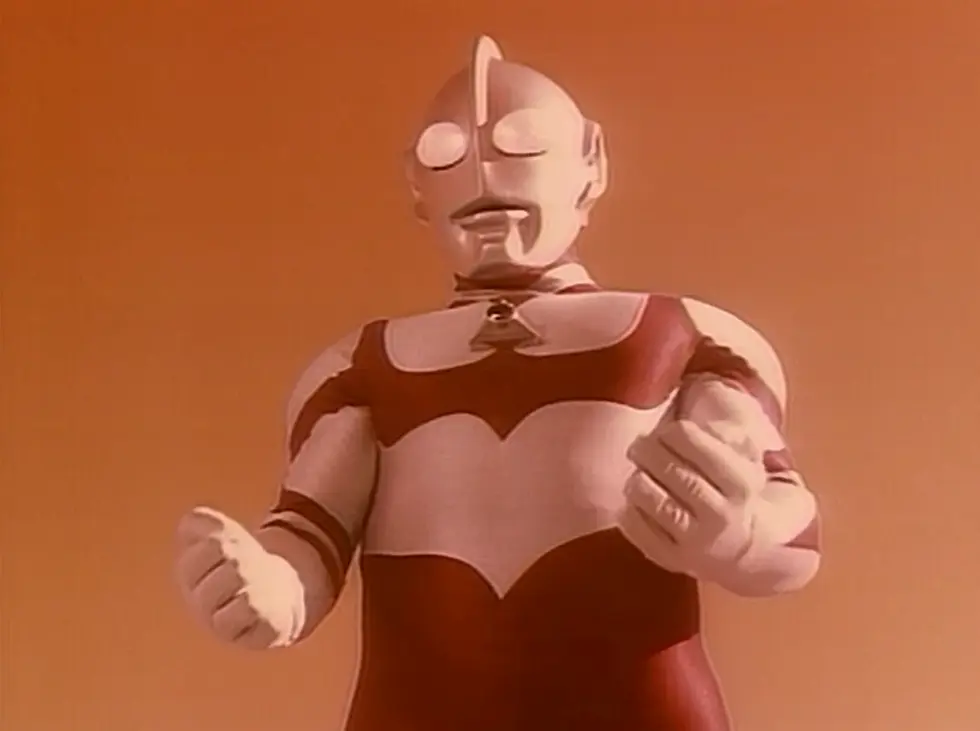
Going into Towards the Future, I had very low expectations. I’d heard mixed opinions about both this series and Ultraman: The Ultimate Hero, so I wasn’t expecting much. However, one of the first things that immediately surprised me right from the opening scene was the creature design. The kaiju throughout the series feature some genuinely impressive suits and animatronics. From their construction to their overall visual presentation, the monsters are easily one of the strongest aspects of the show.

The series begins by focusing on the Gudis alien as the main villain for the first six episodes. This is the same alien we see Ultraman Great battling in the opening scene on Mars. Jack Shindo is on Mars with Stanley Haggard during a space exploration mission when they witness this massive battle. Stanley is seemingly killed while attempting to escape aboard their shuttle, while Jack is pinned beneath debris. Jack eventually frees himself and witnesses Ultraman defeat Gudis, but Gudis’ body disintegrates into a green energy that travels to Earth. This energy becomes the Gudis Virus, capable of possessing dormant kaiju and other lifeforms. With the shuttle destroyed and a second investigation team finding no survivors, both Jack and Stanley are presumed dead.

Back on Earth, we’re introduced to UMA (Universal Multipurpose Agency), an organization based on a private island off the coast of Australia tasked with investigating and responding to unprecedented threats. UMA is led by Commander Arthur Grant, who serves as the team’s authority figure. Next is Jean Echo, played by Gia Carides, who some may recognize from Austin Powers and My Big Fat Greek Wedding. Jean is a scientist with combat capabilities and is frequently deployed into the field especially in the early episodes where she often feels like the true lead of the series, even more so than Jack Shindo, Ultraman’s human host.

The rest of the UMA team includes Deputy Captain Lloyd Wilder, a rigid, by-the-book military officer who often comes across as more serious than Commander Grant. Charles Morgan is another UMA scientist and tech specialist who also serves as the show’s comic relief, frequently flirting with the ladies of UMA. Rounding out the team is Kim Shaomin, a skilled pilot who previously worked with the Ocean Development Center and joins UMA in hopes of helping prevent environmental disasters.

Jack Shindo eventually returns to Earth after being presumed dead and is officially recruited by UMA in episode three. For the first few episodes, Jack largely remains in the background while Jean takes center stage. Around episode four, Jack finally begins to step into the lead role, and by episodes five and six he is firmly established as the main character.
Whenever a kaiju appears, Jack often seems to know its name and origin yet is consistently unable or unwilling to provide meaningful information to the team to help resolve the situation faster and better. Jack communicates with Ultraman several times throughout the series, and Ultraman often comes across more as a mentor than a true partner. Overall, Jack is one of the weaker Ultraman hosts I’ve seen. He frequently comes off like he’s trying to be a suave, Han Solo–style know-it-all but rarely contributes anything useful before running off to transform.

While most Ultraman hosts do disappear to transform, they usually attempt to fight in human form first whether that means piloting a jet to engage a kaiju before it inevitably crashes or using specialized defense weapons or vehicles in a last-ditch effort. At the very least, they try. Aside from briefly taking out mind-controlled humans in episode eleven, Jack never physically confronts a kaiju on his own. Because of this, he feels far less capable as a human host compared to others in the franchise, who are often portrayed as heroes willing to sacrifice their human selves before resorting to becoming Ultraman. Jack never truly sacrifices anything heroically.
After episode six, the Gudis storyline concludes, and the series shifts into the classic Ultraman monster-of-the-week format. From this point on, the episodes improve significantly. We get some really strong monster showcases, and the team dynamic starts to gel much better.

Throughout the series, General Brewer and his subordinate Ike occasionally step in to fill the familiar trope of “this is out of your control, our agency is taking over.” Brewer is completely reckless, showing little interest in strategy beyond killing the monsters at any cost. In one episode, he proposes dropping a nuclear weapon on Australia; in the final two episodes, he suggests attacking a sea monster in a way that could potentially sink part of the continent, then proceeds to launch multiple nuclear weapons into space despite clear warnings about the damage this could cause to Earth’s atmosphere. Rather than attempting to save lives, Brewer is consistently willing to sacrifice many just to eliminate a single kaiju. How this man is in charge is baffling.

Ike fares no better he’s consistently portrayed as a bumbling screw-up, and in the final two episodes he goes AWOL during what appears to be a potential Armageddon, choosing to work dock security instead. While there, he uncovers a cult that believes a kaiju-driven Judgment Day will decide the planet’s fate. In the end, Ike does come around and ultimately helps UMA during the final battle to save the planet.
The clear highlight of Towards the Future is its kaiju. For a 13-episode series, the quality of the suits and animatronics is impressive. Some of my favorite designs include Gigasaurus (episode 2), Ryugolo (episode 10), Kilazee (episodes 12 and 13), and of course Gudis and Super Gudis. My least favorite design was Degunja, a Gudis-possessed creature based on an Aboriginal legend that resembled a Tasmanian Devil and behaved like a live-action version of Looney Tunes’ Taz.
Simply put, it was an ugly design.

While the kaiju designs shine, Ultraman Great’s suit is noticeably different from previous entries. The body appears to be made of spandex, while the head resembles the more traditional Ultra helmet materials, giving it an almost detached look. The suit works visually, but my main complaint lies with the fight choreography. Compared to earlier Ultraman series, the combat feels clunky and slow. The kaiju are far more effective when attacking cities on their own; once Ultraman enters the battle, the pacing noticeably drops. This may be due to heavier suits or the increased use of animatronics and puppetry.
As for the human cast, most of the characters feel interchangeable and underdeveloped. Charles, surprisingly, receives the most personal development, including a subplot involving a breakup and a relationship with Veronica, who turns out to be an alien married to Ryugolo. Jean Echo starts strong as a potential co-lead but fades into the background as the series progresses. Lloyd continues to view Jack as a reckless loose cannon, almost like the Murtaugh to Jack’s Riggs though without the chemistry of the Lethal Weapon duo. Commander Grant remains reliable, consistently backing his team while staying one step ahead of General Brewer’s bureaucracy.

Kim Shaomin’s character ultimately feels underwritten and two-dimensional, giving the impression that she was included more for visual appeal than narrative purpose. Unlike Jean Echo, who had the potential to serve as a co-lead, Kim rarely receives meaningful development or significance within the story.
Overall, at just 13 episodes, Ultraman: Towards the Future is worth checking out for its strong kaiju designs and destruction sequences alone. While it leans heavily into the monster-of-the-week format, it becomes far more enjoyable once the Gudis possession of the week arc ends.

The final episode concludes with Ultraman taking Kilazee back into space and abruptly separating from Jack before cutting to credits. The series was intended to return for a second season, but that never came to be. It leaves an interesting question unanswered: would Jack have reunited with Ultraman, or would a new host have taken his place?
It has been announced that Ultraman: Towards the Future and Ultraman: The Ultimate Hero will both receive official physical media releases in 2026 from Alliance Home Entertainment (formerly Mill Creek Entertainment). I’ll definitely be picking those up when available and will link preorder information once it goes live.

Get The Blu-ray Here (Affiliate Link): https://a.co/d/04HDOS00


Comments